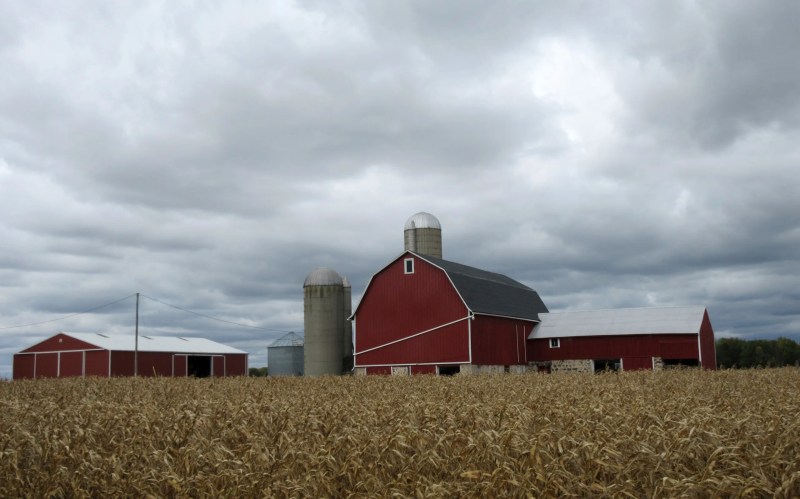
Behind the title of “America’s Dairyland” is a workforce comprised of migrant workers. Experts say without them, the dairy industry could collapse.
Shortly after taking the oath of office for the second time, Donald Trump followed through on a campaign promise to crack down on undocumented immigrants already in the United States and seal the nation’s borders to new migrants through a series of executive actions. But the actions could negatively impact Wisconsin’s economy, particularly its agricultural industry.
It is estimated that over 70,000 undocumented immigrants live in Wisconsin, and not only are a majority of them employed, they’re the driving workforce on Wisconsin’s dairy farms. A 2023 University of Wisconsin-Madison School for Workers survey found that 70% of the workforce on Wisconsin’s dairy farms are immigrants, primarily from Mexico or Central America.
However, due to a gap in United States labor laws, many in this workforce don’t have a legal option for work or citizenship. Currently, agricultural work visas exist only for seasonal employment, not year-round help, as is required on Wisconsin’s dairy farms.
Wisconsin Farmers want a legal option for their employees and have lobbied Congress to pass the “Farm Workforce Modernization Act,” a bipartisan piece of legislation that includes a provision to create a year-round agricultural employment visa. The bill has been introduced in the last three sessions of Congress, even passing in the House in 2021, despite all of Wisconsin’s Republican delegation voting against the bill.
Stricter enforcement from the Trump administration could impact other industries too. Wisconsin Watch reported that in addition to agriculture, the state’s manufacturing, hospitality, and construction industries round out the list of top employers relying on undocumented labor.
But Wisconsin’s undocumented workforce isn’t just contributing to the state’s economy through labor. They’re doing so every time they make a purchase or receive a paycheck. A survey from the Institute on Taxation and Economic Policy (ITEP) found that undocumented immigrants contributed nearly $200 million in state and local tax revenues in 2022.
The ITEP report also showed that undocumented immigrants have a higher tax burden in a majority of states than the wealthiest 1% of all earners, so they’re largely helping to fund programs that they are barred from accessing like Social Security, Medicare, and unemployment.
So if Congress were to pass the Farm Workforce Modernization Act, or another citizenship pathway, not only would the tax contributions for this cohort increase at every level, but Wisconsin’s dairy industry could exhale in the wake of a second Trump term.