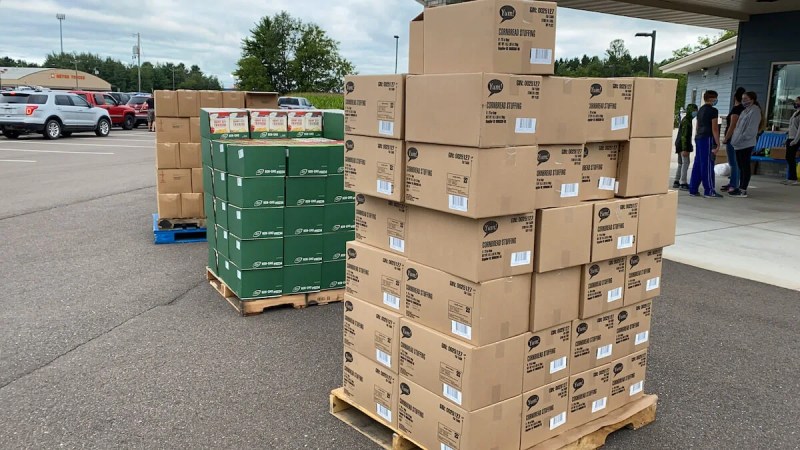
In President Donald Trump’s economy, around 700,000 people in Wisconsin have incomes low enough to require help affording groceries.
The US economy has been teetering on the brink of recession all year. Inflation may be ticking back up to some of last year’s highs. An estimated 300,000 civilian federal government workers were already on track to lose their jobs this year. And now, an ongoing government shutdown has delayed paychecks for those who remain and is threatening to remove the food assistance that helps around 700,000 people across Wisconsin keep food on the table through the Supplemental Nutrition Assistance Program (SNAP).
“It is infuriating that the state of Wisconsin is going to run out of money for SNAP for working families, including some military families who don’t make enough money that they need help to put food on the table,” said political strategist Joe Zepecki on the UpNorthNews radio show “Mornings with Pat Kreitlow.”
President Donald Trump and Republicans in Congress have the power to end the shutdown, if they would agree to a compromise with Democrats, which would prevent health insurance costs from going up for millions of Americans. Instead, Trump is exacerbating the food insecurity being felt by families, instructing his Department of Agriculture to stop processing November benefits even though the US Department of Agriculture has discretionary funds it could use to continue benefits temporarily.
“There’s $5-$6 billlion in USDA emergency contingency money that could go to SNAP,” said William Parke Sutherland, government affairs director for Kids Forward, a Wisconsin advocacy center for children and families.
Long before the shutdown, Trump and GOP lawmakers used a massive tax and spending bill to cut $186 billion from the nutritional support program (formerly known as food stamps) by 2034, putting about 22 million families nationwide in a position to lose some or all of their benefits. Much of the benefit loss will come not from direct cuts but from new, onerous requirements lower-income families will need to meet to continue receiving the assistance they are legally allowed to have.
“This really weaponizes red tape in order to cut services for people,” Parke Sutherland said on Civic Media’s Maggie Daun Show. “They’re cutting in half the amount of money the federal government usually chips in to help states administer the program. It really sets up Wisconsin to fail. We need more time from Congress [or] we need the state legislature to allocate funding so that we can continue to run SNAP efficiently and effectively.”
Kids Forward senior policy analyst Amanda Martinez noted how the Trump and Republican agenda has had a disproportionate impact on families already struggling with job insecurity, made worse by a targeting of immigrants who often work in elder care, health care, and other service roles.
“It creates barriers on top of barriers that already exist for people who are working, such as unpredictable work hours, transportation barriers, as well as limited access to child care,” Martinez said.