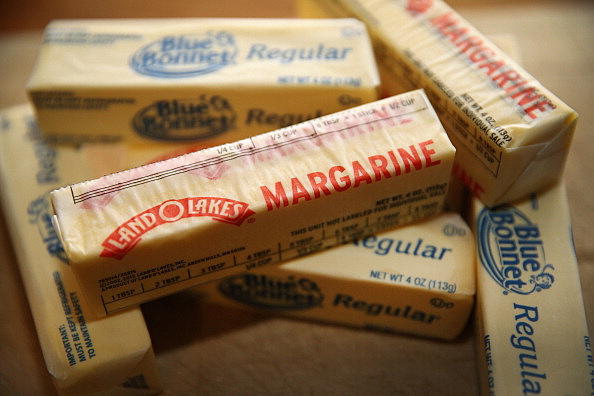
Wisconsin is governed by several strange laws, but possibly none more niche that State Law Sec. 97.18(4) which says, “The serving of colored oleomargarine or margarine at a public eating place as a substitute for table butter is prohibited unless it is ordered by the customer.”
Simply put, it’s illegal for a Wisconsin restaurant to serve you margarine unless you specifically ask for it.
🧈 Why?
It all started in 1895 when the State Legislature passed a law banning the manufacture or sale of yellow-colored margarine, also called “oleo,” because it was believed to be a threat to the dairy industry. It remained illegal for almost 75 years, until 1967 when state senator Gordon Roseleip (who was especially vocal about his anti-oleo stance) agreed to a blindfolded taste test of butter and margarine. He failed, and the law was reversed.
MORE: 6 Strange Wisconsin Laws That Are Still on the Books
(It was later revealed that his wife had been serving him margarine, purchased in Iowa, and telling him it was butter, because margarine was believed to be healthier than butter at the time.)
🧈 FUN FACT: During the 1950s and ’60s, many Wisconsin women went on “oleo runs” to stock up on margarine in Illinois because it was cheaper and considered a modern alternative to butter. Technically, they could’ve been fined up to $6,000, but there’s no evidence that the law was ever enforced.
However, even when the ban was repealed, it remained illegal for restaurants to serve margarine instead of butter unless the customer specifically asked for it… and that law still stands today. A 2011 push to repeal that law was unsuccessful.
🧈 DID YOU KNOW? Wisconsin had another butter ban that ran from 1970 until 2017, prohibiting the sale of all butter that wasn’t made in “America’s Dairyland,” including the popular Kerrygold butter, which is made in Ireland.