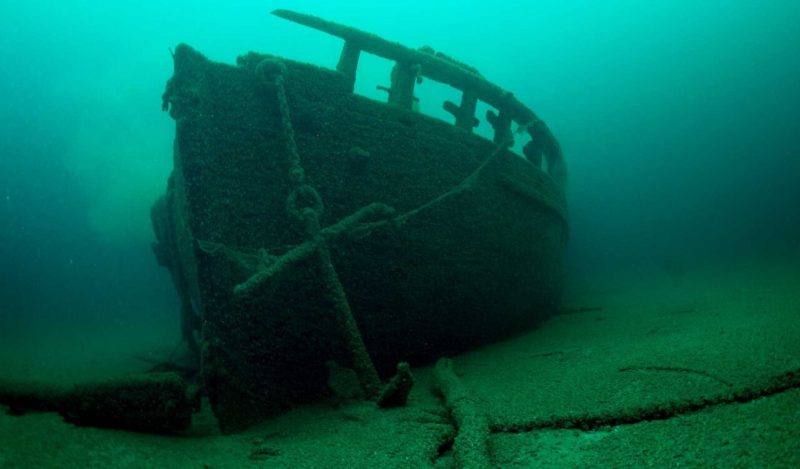
The Great Lakes’ frigid fresh water used to keep shipwrecks so well preserved that divers could see dishes in the cupboards. Today, an invasive mussel species is destroying centuries of history–forcing historians, archeologists, and divers into a race against time.
⚓️ What’s Happening: Quagga mussels, finger-sized mollusks with giant appetites, have surpassed zebra mussels as the dominant invasive species in the lower Great Lakes over the past 30 years. Unlike their infamous cousin species, quaggas are hungrier, hardier, and more tolerant of colder temperatures. They can consume so many nutrients at such a high rate that portions of the typically-murky Great Lakes become as clear as tropical seas once they’ve invaded.
⚓️ Where: Quaggas now cover nearly every shipwreck and downed plane in every Great Lake, except Lake Superior. Scientists believe the invasive species, native to Ukraine and Russia, arrived via ballast dumps from transoceanic freighters making their way to Great Lakes ports.
Interactive Map: Pictures of Every Shipwreck Discovered in Wisconsin
⚓️ What They Do: The mussels burrow into wooden vessels, building upon themselves in layers so thick that they eventually crush walls and decks. Divers who try to brush them off inevitably peel away some wood, too. They also produce acid that can even corrode steel and iron ships, accelerating metal shipwrecks’ decay. No one has found a viable way to stop them.
⚓️ What’s Next: Now, historians, archeologists, and divers are in a race against time to find and at least snap a picture of Great Lakes shipwrecks before it’s too late. For example, Brendon Baillod, a Great Lakes historian based in Madison, spent the five years searching for the Trinidad, a grain schooner that went down in Lake Michigan in 1881. He and fellow historian Bob Jaeck finally found the wreck in 2023 off Algoma, Wisconsin, but the site was “fully carpeted” with quagga mussels. Here’s what they did next.