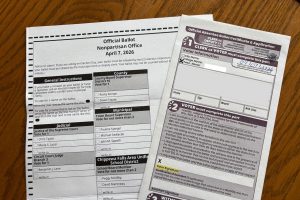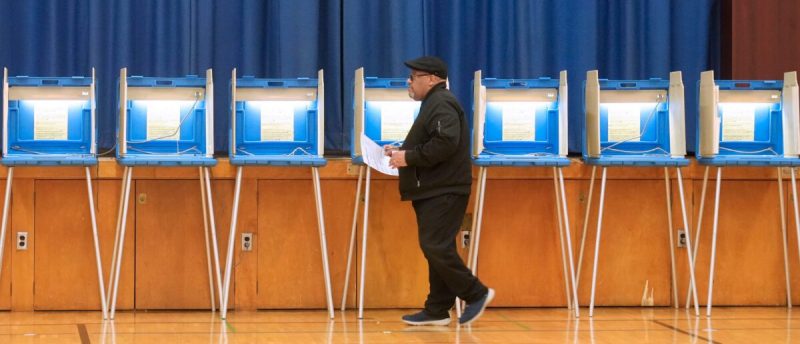
After Justice-elect Chris Taylor’s whopping 20-point margin of victory, it might be a surprise that only about one in three of Wisconsin’s voting-age residents turned out in the April 7 election.
Unofficial results posted by the Associated Press as of 12:45 p.m. Wednesday, April 8 showed 1,506,444 Wisconsinites cast ballots in the election – about 905,000 for Taylor, 600,000 for Lazar and 1,250 write-in votes.
Compare that to 2025, when 2,364,887 people cast ballots, according to certified, official results kept by the Wisconsin Elections Commission – about 858,000 more votes cast than this year.
There are two ways of calculating voter turnout. One uses the state’s voting-age population, or residents over age 18. The most recent figure from the state Department of Administration is 4,755,219.
So, dividing the approximately 1.5 million ballots cast in the April 7 election by that number produces a turnout of about 32%.
The other method uses the total number of registered voters among that population. The most recent statistic available for Wisconsin’s registered voters, posted April 1, was 3,593,369.
Using that number, turnout in the April 7 election would be around 42%. But that method doesn’t take into account additional voters who registered at the polls on Election Day.
The WEC notes it hasn’t certified the results of the April 7 election, so preliminary election results and turnout estimates aren’t final. It’s common for vote tallies to change slightly as election officials start the canvassing process.
2026 turnout was a ‘return to normal’ but still higher than earlier years
Political experts previously forecasted a return to normal turnout in the 2026 race after nationally watched state Supreme Court races in 2025 and 2023, when control of the court was up for grabs.
The 2025 race that elected liberal Justice Susan Crawford drew more than half of Wisconsin’s voting-age population out to vote, with turnout reaching 51%. In the 2023 race that added liberal Justice Janet Protasiewicz to the bench, turnout was around 40% of the voting-age population.
But those previous two court races had much higher turnouts than usual for spring elections in Wisconsin.
Contested state Supreme Court elections in 2020, 2019 and 2018 had voting-age turnouts of 35%, 27%, 22%, according to data kept by the Wisconsin Elections Commission.
So 2026’s comparable turnout of around 32% puts it on par with that era of Supreme Court elections. It’s even slightly behind the 2020 race, which took place at the beginning of the pandemic but also had the presidential primary on the ballot.
Further back, spring elections with a contested Supreme Court race on the ballot had voting-age turnouts of 21% in 2000, 20% in 2003 and 19% in 2007 and 2008.
Hope Karnopp can be reached at HKarnopp@usatodayco.com.
This article originally appeared on Milwaukee Journal Sentinel: What was voter turnout in the 2026 Wisconsin Supreme Court election?
Reporting by Hope Karnopp, Milwaukee Journal Sentinel / Milwaukee Journal Sentinel
USA TODAY Network via Reuters Connect